The English version of our website is currently under construction. We’ll be online soon. Thank you for your patience!
show more
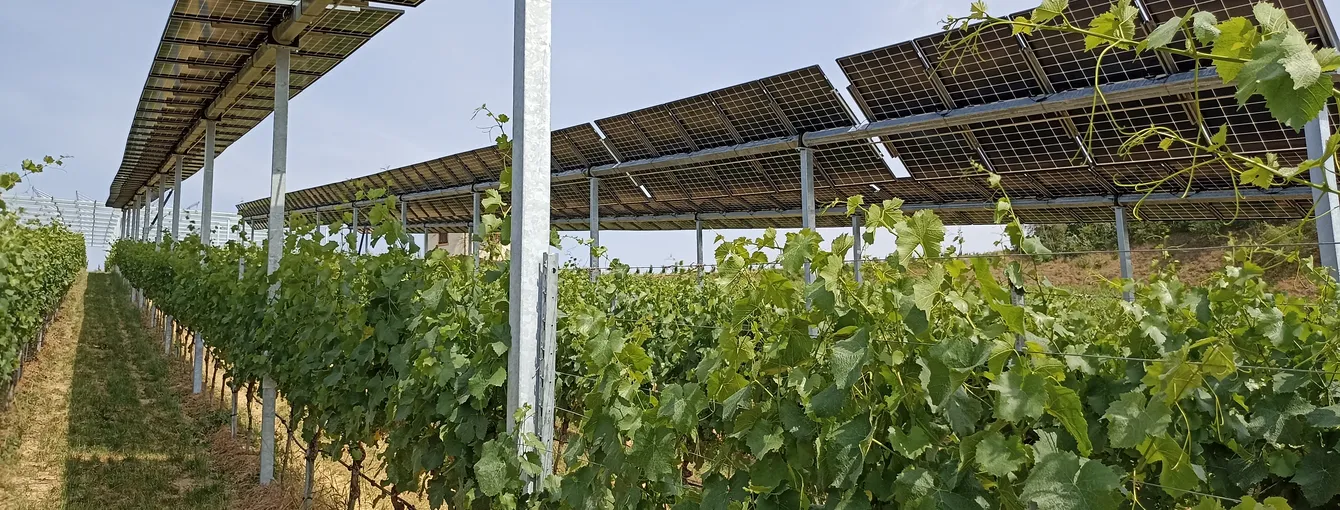
Agrivoltaics (AV) is set to be a transformative technology, offering a groundbreaking solution to the competition for land by enabling the simultaneous production of agricultural goods and electricity via photovoltaic modules. Implementing AV in Germany requires pilot projects and a wide range of expertise. Find out more about our AV projects in Baden-Württemberg here!
show more
Agrivoltaics is as diverse as agriculture itself. During the first project phase (2022–2024), we focused on combining photovoltaics with the cultivation of speciality crops such as apples, pears, plums and berries. In the second phase (2025–2026), we will expand our focus to include grasslands, livestock, grapevines, arable crops, and conifers.
show more
Understanding the complex interactions between agriculture and photovoltaics requires an integrated approach. The interplay of various disciplines, from agricultural sciences and systems engineering to hydrology, legal aspects and social considerations, is essential to establishing agrivoltaics as a sustainable technology.
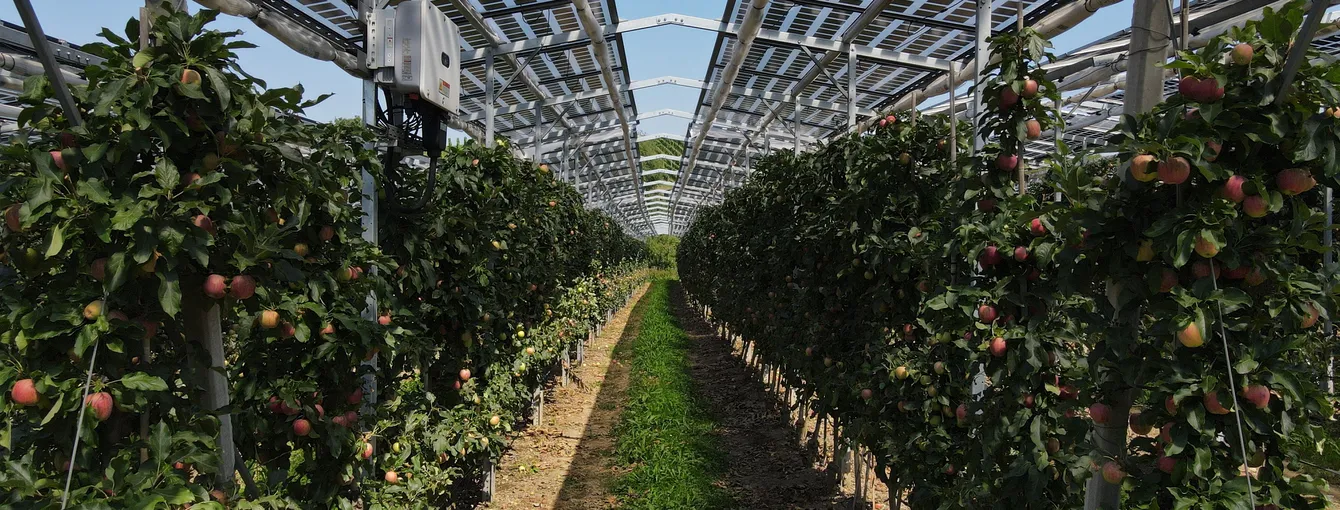
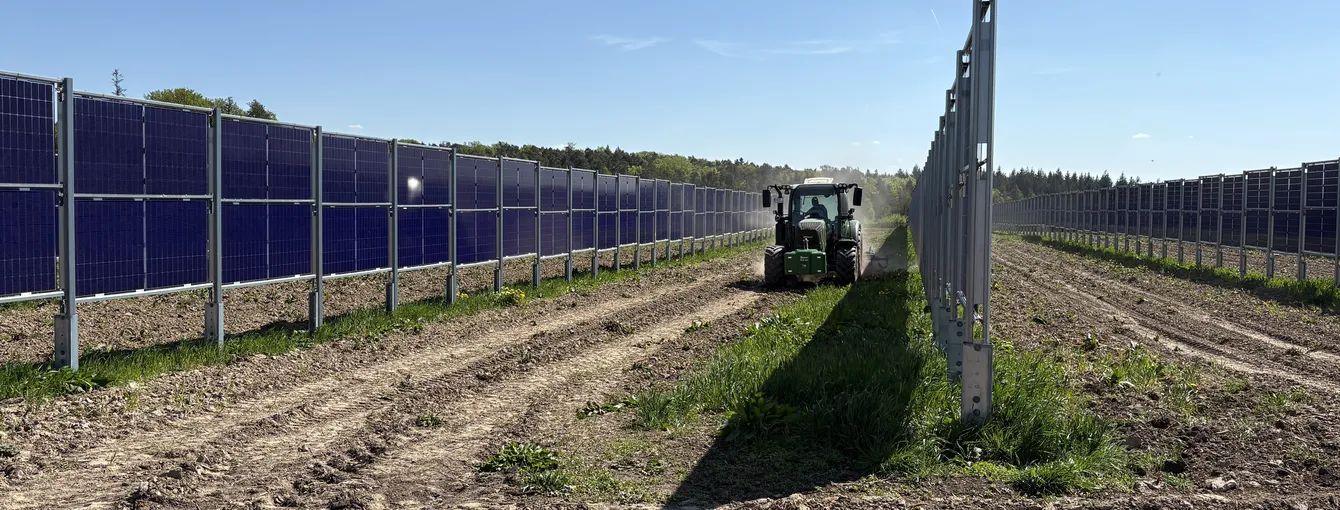
show moreClimate change threatens our harvests through intense solar radiation and an increasing number of extreme weather events such as hail and heavy rainfall. In addition, there is growing competition between energy production and agricultural use for available land. Agrivoltaics (AV) could help address these challenges: photovoltaic modules are installed above the cultivated areas, allowing fertile soils to remain viable for farming while also providing additional weather protection for the crops. This way, food and electricity can be produced on the same plot. The orientation and transparency of the PV modules are tailored to the plants' specific needs. The foundation-free substructures allow complete removal without residues that could impair future agricultural use. Further research aims to unlock the potential of this technology for Germany.
The project »Model Region Agrivoltaics for Baden-Württemberg« involves an interdisciplinary consortium of over 20 partners aiming to advance the expansion of this technology across the federal state of Baden-Württemberg, with financial support from the Ministry of Environment, Climate and Energy Sector and the Ministry of Food, Rural Affairs and Consumer Protection. During the first phase (2021-2024), research concentrated on pome fruit, stone fruit and and berry fruits, with agrivoltaic systems exceeding 1.700 kWp installed at five sites (Bavendorf, Heuchlingen, Karlsruhe, Kressbronn am Bodensee, and Oberkirch-Nußbach). The second phase (2025-2026) broadens the focus to explore the potential of the combination between photovoltaics and livestock farming, winegrowing, reforestation, grasslands, and arable farming.
clicking on the preview image will redirect you to YouTube. The YouTube privacy policy applies there..
Looking for an exciting Master's thesis topic? The LAZBW and DHBW Ravensburg are seeking motivated students to analyse the grazing behaviour on agrivoltaic sites using deep learning-based image evaluation. Explore animal behavior and grassland development while assessing the practical relevance of this technology. Applications due by January 9, 2026. More information on the LAZBW website.
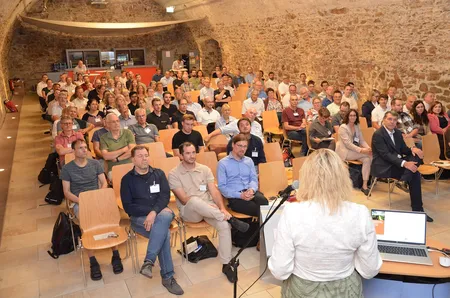
Under the radiant sun, an overhead agrivoltaic system was officially opened at the University of Hohenheim's experimental station »Ihinger Hof«. State Secretary Sabine Kurtz MdL emphasised in her remarks the importance of such pilot projects for research and practice. Afterward, guests had the opportunity to exchange ideas with the responsible researchers.
Felix Goldbach, creator of the YouTube channel »Money for Future«, has been deeply involved with renewable energy and sustainability for many years. In his latest video, he visits the agrivoltaic facility in Oberkirch-Nußbach and talks with project manager Oliver Hörnle about the advantages and challenges of agrivoltaics.